
Service overview
Roadside help designed around the actual problem.
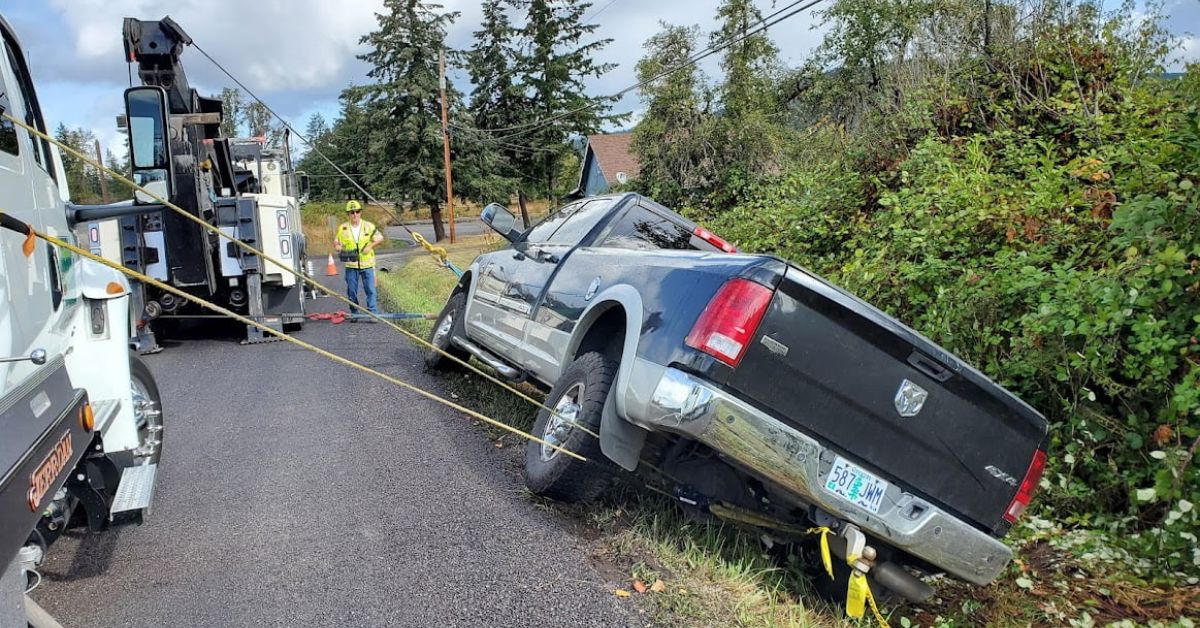
A vehicle that is stuck off the road requires more than pulling power. Safe recovery depends on access, terrain, attachment points, traffic conditions, and the angle of the pull.
Every recovery is different
Before dispatch, describe how the vehicle is positioned, how far it is from solid pavement, and what obstacles are nearby. Photos can be useful when available, but the operator will still assess the scene on arrival.
Information that helps us prepare
- Whether the vehicle is in snow, mud, sand, or a ditch
- Approximate distance from a stable roadway
- Whether the vehicle is upright and accessible
- Nearby obstacles such as trees, barriers, or steep grades
- Any visible damage that may affect recovery
Recovery first, tow second if needed
Once the vehicle is back on stable ground, it may be able to continue safely. If it has damage or cannot be driven, towing can be arranged from there.
FAQ
Questions about this service
Can you recover a vehicle from snow or mud?
Many winch-out situations involve snow, mud, or soft shoulders. The exact recovery method depends on access and vehicle position.
Should I keep trying to drive out?
Repeated wheel spin can dig the vehicle in deeper or create additional damage. If traction is not improving, it is often better to stop and request recovery.
Can recovery damage my vehicle?
Any recovery has variables, which is why careful attachment, controlled pulling, and scene assessment are important.